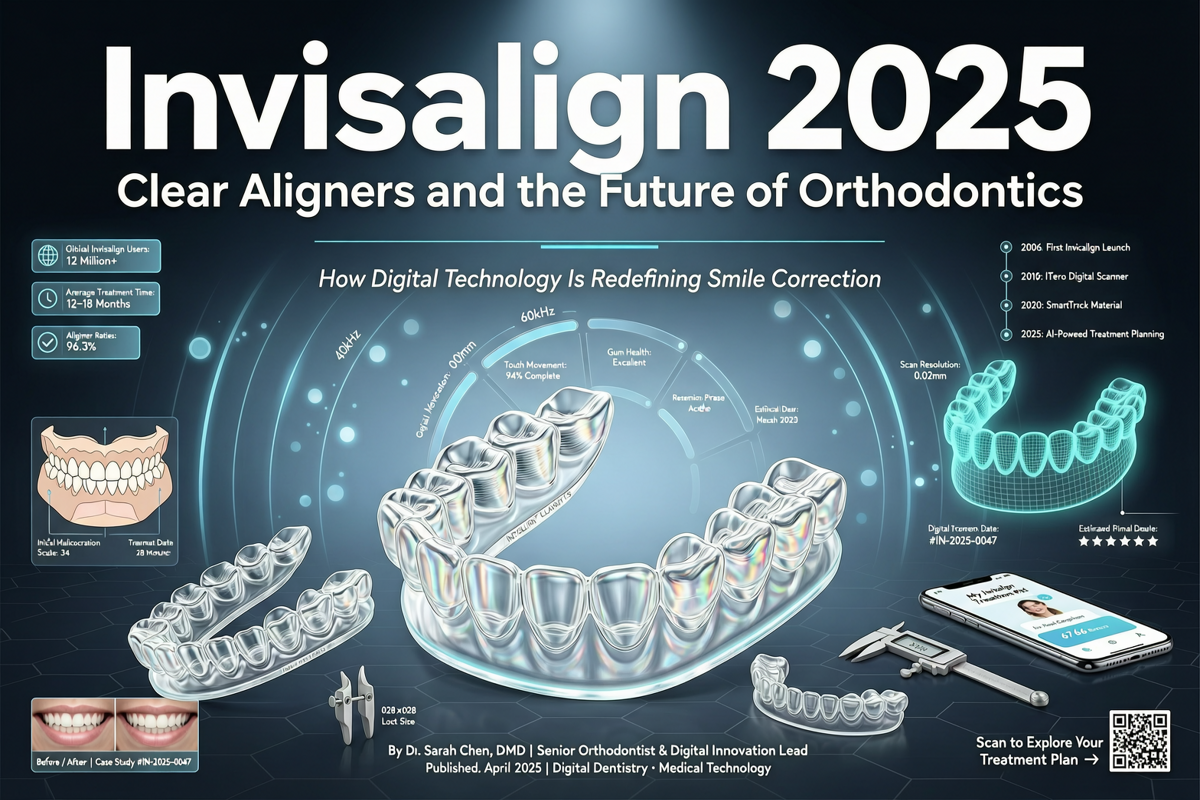
Invisalign 2025: Clear Aligners and the Future of Orthodontics
Discover how Invisalign is transforming orthodontic treatment in 2025 with advanced technology, faster results, and improved patient comfort.
Introduction: The Rise of Clear Aligners
In the ever-evolving world of orthodontics, Invisalign has emerged as a revolutionary alternative to traditional metal braces. As we move through 2025, clear aligner therapy continues to gain popularity among teens and adults seeking a discreet, comfortable, and effective way to straighten teeth. This article explores the latest advancements in Invisalign technology, treatment timelines, costs, and what patients can expect from this modern orthodontic solution.
How Invisalign Works
Invisalign uses a series of custom-made, transparent plastic aligners that gradually shift teeth into the desired position. Each aligner is worn for about one to two weeks before being replaced by the next in the series. The treatment plan is mapped out using 3D computer imaging, allowing patients to see a virtual preview of their smile before starting.
Key Components of Invisalign Treatment
- SmartTrack Material: Invisalign aligners are made from a proprietary thermoplastic material that provides a precise, comfortable fit and applies gentle, constant force to move teeth efficiently.
- SmartForce Attachments: Small tooth-colored bumps bonded to specific teeth help the aligners grip and apply targeted pressure for complex movements.
- ClinCheck Software: Orthodontists use this advanced software to simulate tooth movement and design a personalized treatment plan.
- Invisalign App: Patients can track their wear time, view treatment progress, and receive reminders to ensure compliance.
Advancements in 2025
Invisalign continues to innovate, and 2025 brings several notable improvements:
Faster Treatment Times
New SmartForce features and optimized aligner sequences have reduced average treatment times by up to 30% for mild to moderate cases. Some patients achieve results in as little as six months.
Enhanced Predictability
Artificial intelligence now plays a larger role in ClinCheck, improving the accuracy of predicted tooth movements and reducing the need for mid-course corrections.
Improved Comfort
Thinner aligner edges and smoother contours minimize gum irritation, making the experience more comfortable than ever.
Expanded Treatment Scope
Invisalign can now address more complex orthodontic issues, including severe crowding, overbites, underbites, and crossbites, thanks to new attachment designs and staging protocols.
Who Is a Good Candidate?
Invisalign is suitable for most people with mild to moderate orthodontic issues. Ideal candidates include:
- Teens and adults with fully erupted permanent teeth
- Individuals with good oral hygiene habits
- Those willing to wear aligners 20–22 hours per day
- Patients with non-severe malocclusions
However, severe skeletal discrepancies or cases requiring significant tooth rotation may still benefit from traditional braces or a combination approach.
Treatment Process
Consultation and Digital Scanning
Your orthodontist will evaluate your teeth and take digital impressions using an intraoral scanner, eliminating the need for messy traditional molds.
Custom Treatment Plan
Using ClinCheck, your doctor designs a step-by-step plan showing the expected movement. You can approve the virtual result before aligners are manufactured.
Receiving Aligners
A series of aligners is shipped to your home or office. Each set is worn for 1–2 weeks, and you'll have periodic check-ups (often virtual) to monitor progress.
Retention Phase
After active treatment, you'll need to wear retainers to maintain your new smile. Invisalign offers Vivera retainers made from the same SmartTrack material.
Cost and Insurance
Invisalign treatment costs vary depending on complexity, geographic location, and provider experience. On average, prices range from $3,000 to $8,000. Many dental insurance plans cover a portion of the cost, similar to traditional braces. Flexible spending accounts (FSAs) and health savings accounts (HSAs) can also be used.
Pros and Cons
Advantages
- Aesthetic: Nearly invisible, making them popular among adults and teens.
- Comfort: Smooth plastic causes less irritation than metal brackets.
- Removable: Eat, brush, and floss normally without restrictions.
- Fewer Office Visits: Typically every 6–8 weeks, compared to monthly adjustments for braces.
Disadvantages
- Discipline Required: Must be worn at least 20–22 hours daily.
- Not for Severe Cases: Extreme malocclusions may require alternative treatments.
- Potential for Lost Aligners: Misplacing aligners can delay progress.
- Speech Adjustment: A temporary lisp is common in the first few days.
Invisalign vs. Traditional Braces
While both options effectively straighten teeth, Invisalign offers greater convenience and aesthetics. Traditional braces are still superior for complex tooth movements and for patients who may not comply with aligner wear. Cost is comparable for mild to moderate cases.
Conclusion
Invisalign has revolutionized orthodontic care, offering a discreet and comfortable path to a beautiful smile. With continued advancements in 2025, it's an excellent choice for many seeking orthodontic treatment. Consult with an experienced Invisalign provider to determine if clear aligners are right for you.