Coolmath Games: A Teacher-Built Puzzle Portal That Endures
Coolmath Games grew from a math teacher's classroom site into a free browser portal for puzzles, strategy and quick thinking games. Here's why it endures.
Coolmath Games is one of those rare websites that feels older than the modern internet yet keeps showing up in the same browser tabs as homework, video calls and group chats. At coolmathgames.com, visitors find a free, no-download collection of casual puzzle, strategy and skill games. The name suggests arithmetic drills. The reality is broader: mazes, physics puzzles, tower defense, word games, chess, and the kind of quick-retry challenges that turn a five-minute break into a forty-minute session.
What Coolmath Games actually is
Coolmath Games is a browser-based gaming portal, not a single game. It grew out of Coolmath.com, a math-help site started by a classroom teacher. The games section began as a small companion to lessons and then became the main attraction. Today the site organizes games into categories such as puzzle, strategy, numbers, skill and thinking games. Most titles run in the browser and do not require a download or an account. Ads support the free model, so the experience varies by page and device.
Unlike app-store games, Coolmath Games is built around low friction. There is no install, no update prompt and no mandatory sign-up. That makes it a natural fit for shared computers, school Chromebooks and quick sessions. It also means the catalog is wide and uneven: polished puzzle hits sit beside simple time-killers. The best way to use the site is to treat it like a library, not a single product.
The teacher origin and the thinking-games philosophy
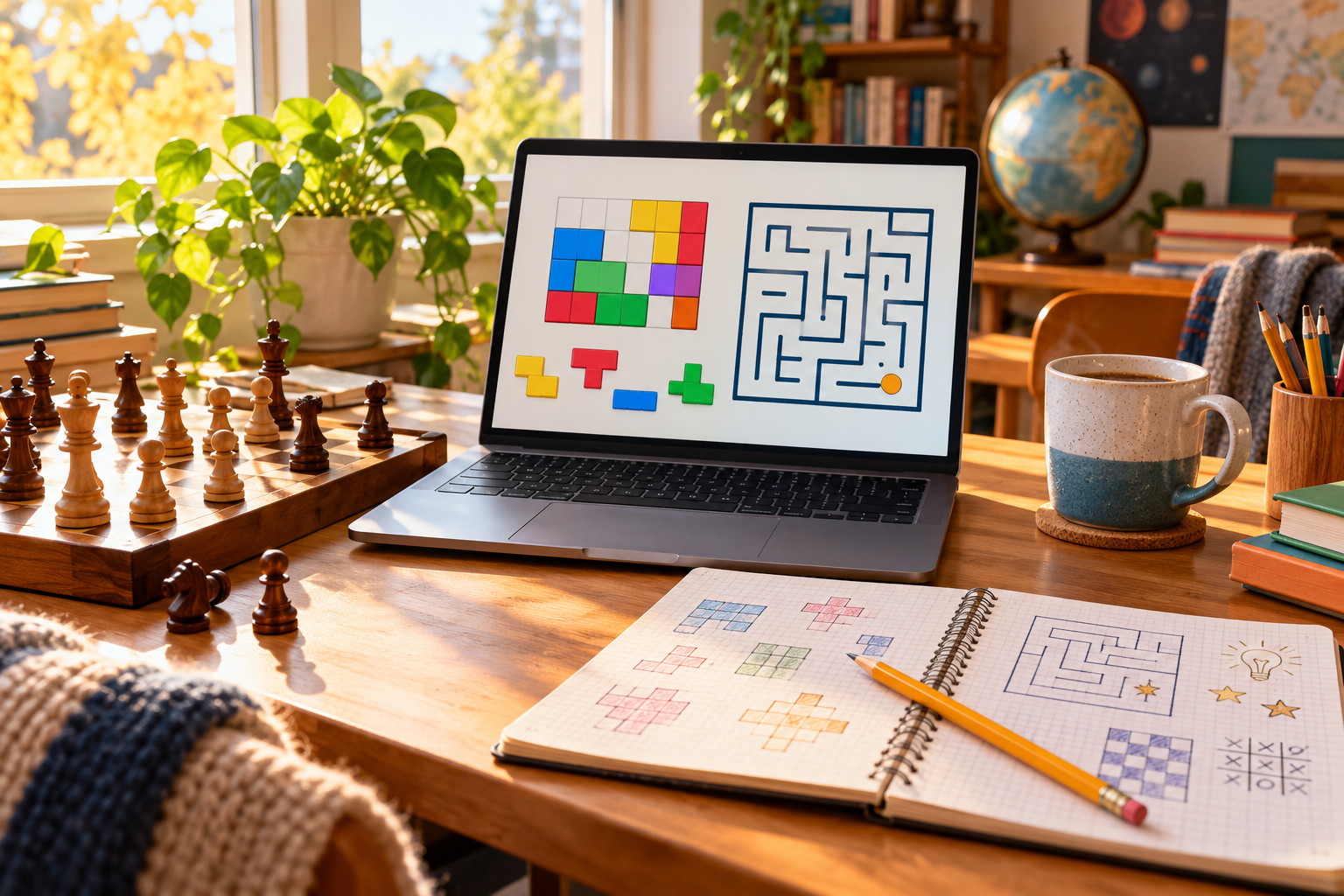
The site's origin matters. A math teacher built Coolmath.com to explain tricky concepts, and games were a way to make practice less painful. That DNA is still visible in the site's emphasis on logic, planning and spatial reasoning. Coolmath Games is not a curriculum, and plenty of its titles have nothing to do with math. But the brand's sweet spot is the 'thinking game'—a puzzle with simple rules and a difficulty curve that asks players to experiment, fail and try again.
Games such as Bloxorz, Sugar, Sugar, Fireboy and Watergirl, and the Run series fit that mold. They are easy to start and hard to put down because they reward pattern recognition and persistence. The site also hosts chess, checkers, mahjong and number puzzles, which appeal to players who want a quieter kind of challenge. The common thread is not arithmetic. It is the pleasure of figuring something out.
Why it survived when other portals faded
Many free-game portals from the 2000s disappeared or became ad-choked shells. Coolmath Games endured for a few reasons. First, the brand had trust: parents and teachers recognized the name, and kids passed it around. Second, the site was built for the browser, so it moved with the web. When Adobe Flash retired at the end of 2020, Coolmath Games migrated much of its catalog to HTML5 and retired games that could not make the jump. That transition was messy, but it kept the site playable on modern devices.
Third, Coolmath Games understands session length. Its best games load fast, explain themselves in seconds and let players restart immediately. That rhythm suits casual play. It also suits classrooms, which is both a strength and a complication. Teachers sometimes use a puzzle as a brain break or a reward. Schools also block or filter game sites. The site's popularity on school devices has made it a perennial search term, but access should always follow school rules and classroom norms.
What makes a good Coolmath-style puzzle
Not every game on the portal is a gem, and not every game is educational. A good casual puzzle tends to share a few traits:
- Clear rules: You understand the goal in under a minute.
- Fast feedback: Mistakes are visible and cheap to fix.
- Escalating challenge: Early levels teach; later levels combine.
- Short sessions: A level fits into a break, but a run can last longer.
- Low friction: No long tutorial, no download, no forced account.
The best titles also respect the player's time. They do not hide the fun behind energy timers or paywalls. That is a big part of the appeal for parents who want a game their kids can dip into without a spending conversation.
How to use it well
For players, the main risk is not the games themselves. It is the drift from a five-minute puzzle to an hour of tab-hopping. A few habits help:
- Pick a category first: Puzzle or strategy tends to produce better sessions than random clicking.
- Set a timer: Casual games are designed to be hard to stop; a timer restores the boundary.
- Expect ads: Free games need revenue. Use a browser with sensible ad blocking and avoid clicking through odd prompts.
- Skip accounts: Most games do not need one. If a page asks for personal details, close it.
- Talk about strategy: For kids, asking 'what did you try?' turns play into reflection.
For teachers and parents, Coolmath Games works best as a supplement, not a lesson plan. It can model persistence, spatial reasoning and trial-and-error. It cannot replace instruction, and it should not be used to fill time without supervision. Check the specific game first; the catalog is broad enough that a puzzle with clear logic sits near a pure action game.
The bottom line
Coolmath Games is not fancy. It is a free browser portal with ads, a sprawling catalog and a name that undersells its range. That may be exactly why it endures. In an era of installs, subscriptions and endless notifications, a site that opens in a tab and asks you to solve one more puzzle still has a place. The math teacher's side project became a casual-gaming institution because it kept the barrier low and the thinking central. Play it for a break, a brain warm-up or a shared challenge—just keep an eye on the clock.