Dow Jones Industrial Average: Blue-Chip Resilience in 2025
Explore how the Dow Jones Industrial Average is navigating 2025 with a focus on blue-chip stocks, interest rate shifts, and sector rotation. Key insights for investors.
Introduction: The Dow's Steady Hand in a Turbulent Market
The Dow Jones Industrial Average (DJIA) has long been the bellwether of American economic health, tracking 30 of the nation's most influential blue-chip companies. As we move through 2025, the Dow is once again proving its mettle, offering a counterbalance to the tech-heavy volatility of the Nasdaq and the broader S&P 500. While the S&P 500 has been buffeted by AI hype and interest rate uncertainty, the Dow's composition—heavy on industrials, financials, and consumer staples—has provided a more stable ride. Year-to-date, the Dow has posted modest gains, outperforming its peers in several key sessions. This article delves into the forces shaping the Dow in 2025, from Federal Reserve policy to sector rotation, and what it means for investors.
The Fed's Influence: Rate Cuts and Economic Resilience
One of the most significant drivers of the Dow's performance in 2025 has been the Federal Reserve's pivot toward a more accommodative stance. After a prolonged period of high interest rates aimed at curbing inflation, the Fed began cutting rates in early 2025, with two quarter-point reductions already implemented. Lower rates are particularly beneficial for the Dow's financial components—JPMorgan Chase, Goldman Sachs, and American Express—as they reduce borrowing costs and stimulate lending activity. Additionally, rate-sensitive sectors like housing and consumer durables have seen a boost, lifting stocks such as Home Depot and Caterpillar. However, the Fed's actions are not without risks. Persistent inflation in services and wage growth could force a pause, creating headwinds. The Dow's resilience lies in its exposure to companies with strong pricing power and global diversification, which help buffer against domestic economic fluctuations.
Sector Rotation: From Tech to Value
2025 has witnessed a pronounced rotation from growth-oriented tech stocks to value and cyclical sectors—a trend that plays directly into the Dow's strengths. With the AI frenzy cooling and valuations in the tech sector stretched, investors are seeking refuge in companies with solid earnings, dividends, and tangible assets. The Dow's roster includes stalwarts like Coca-Cola, Procter & Gamble, and Johnson & Johnson, which offer defensive characteristics in uncertain times. Meanwhile, industrial giants like Boeing and 3M are benefiting from a resurgence in manufacturing and infrastructure spending, fueled by government initiatives like the CHIPS Act and the Infrastructure Investment and Jobs Act. This rotation has helped the Dow maintain an upward trajectory even as the Nasdaq experiences periodic sell-offs. The key question for the remainder of 2025 is whether this rotation will deepen, potentially pushing the Dow to new all-time highs.
Corporate Earnings: A Mixed Bag with Positive Surprises
Earnings season in 2025 has been a tale of two halves for the Dow components. On one hand, consumer-facing companies have reported robust results, driven by resilient spending and pricing power. McDonald's, for instance, saw same-store sales growth of 4% in the last quarter, while Visa benefited from increased transaction volumes. On the other hand, some industrial and energy names have faced margin pressure due to rising input costs and geopolitical uncertainty. Chevron and ExxonMobil, though not Dow components, influence sentiment via the broader market. Among Dow stocks, UnitedHealth Group has been a standout, posting double-digit earnings growth on the back of expanded Medicare Advantage enrollment. Overall, the earnings beat rate for the Dow is running at around 65%, slightly above the historical average, indicating that blue-chip companies are effectively navigating the current environment. This earnings resilience provides a solid foundation for the index's valuation, which remains reasonable relative to history.
Global Risks and the Dow's Safe-Haven Appeal
Geopolitical tensions and global economic slowdowns have not spared the Dow, but its diversified nature offers a degree of insulation. The ongoing conflict in Ukraine and trade frictions between the US and China have created supply chain disruptions, particularly affecting industrial and materials companies. However, the Dow's exposure to these risks is mitigated by its multinational revenue streams. For example, Apple, a Dow member, generates over half its revenue outside the Americas, providing a hedge against US-specific downturns. Similarly, McDonald's and Coca-Cola have strong international footprints that allow them to capitalize on growth in emerging markets. In times of global uncertainty, the Dow often acts as a safe haven, attracting capital from investors seeking stability. This dynamic has been evident in 2025, with the Dow experiencing lower volatility than the S&P 500 and Nasdaq, reinforcing its reputation as a core holding for long-term portfolios.
Technical Outlook and Key Levels
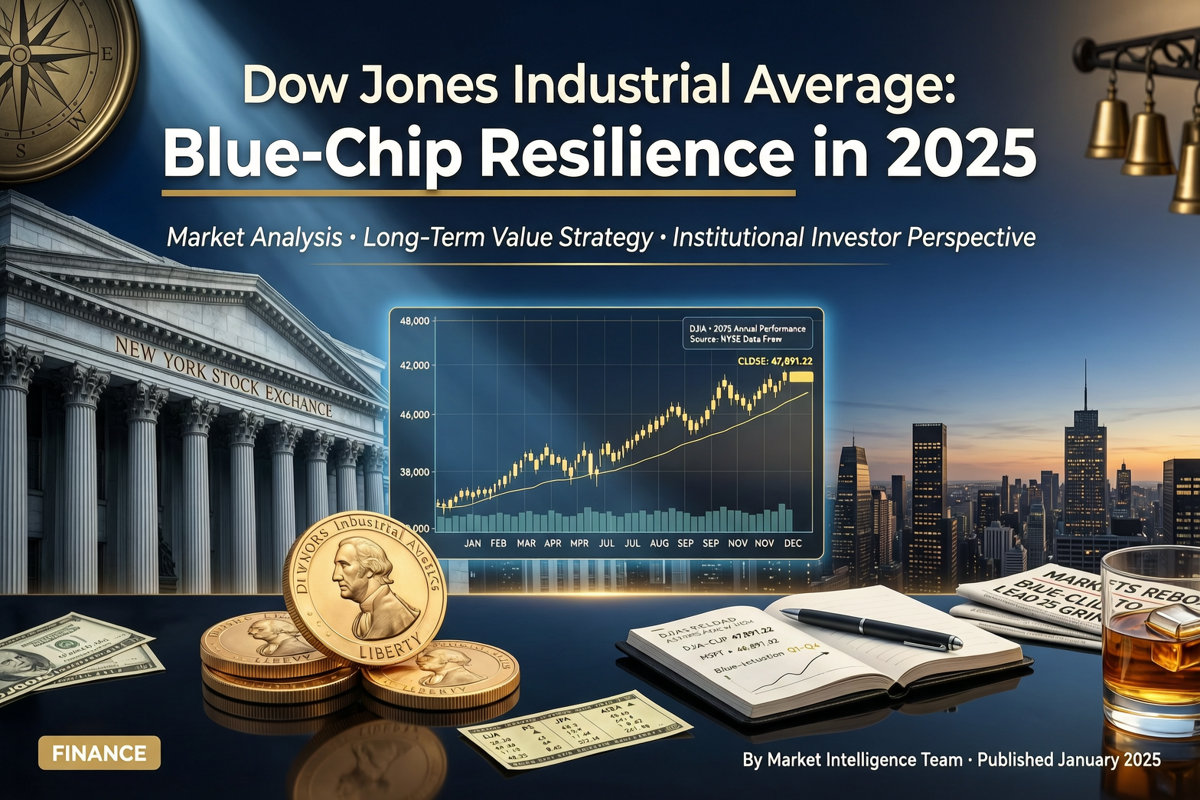
From a technical perspective, the Dow Jones Industrial Average is trading near its 50-day and 200-day moving averages, indicating a neutral to slightly bullish trend. The index has established support around the 38,000 level, with resistance at the psychologically important 40,000 mark. A breakout above 40,000 would signal strong momentum and could pave the way for a test of the all-time high near 41,000. Conversely, a breakdown below 37,500 might trigger a correction, though the fundamental backdrop suggests limited downside. Volume patterns have been mixed, with higher volume on up days, a positive sign. The Relative Strength Index (RSI) hovers around 55, suggesting the index is neither overbought nor oversold. For traders, the key is to watch for a catalyst—such as a dovish Fed surprise or a strong earnings season—that could propel the Dow higher. In the meantime, the index's steady climb offers opportunities for both short-term traders and long-term investors.
Conclusion: Dow's Enduring Relevance in 2025
The Dow Jones Industrial Average may be over a century old, but its relevance in 2025 is undeniable. As a barometer of the US economy, it reflects the strength and resilience of America's corporate giants. While it may not capture the explosive growth of tech startups, it offers a reliable path to wealth accumulation through dividends and steady appreciation. For investors navigating the complexities of 2025—from interest rate shifts to geopolitical risks—the Dow provides a familiar anchor. Whether you're a seasoned investor or a newcomer, keeping an eye on the Dow's movements can offer valuable insights into market sentiment and economic trends. As always, diversification remains key, but the Dow's blue-chip composition makes it a cornerstone of any well-balanced portfolio. Stay tuned as we continue to track the Dow's journey through the rest of 2025.