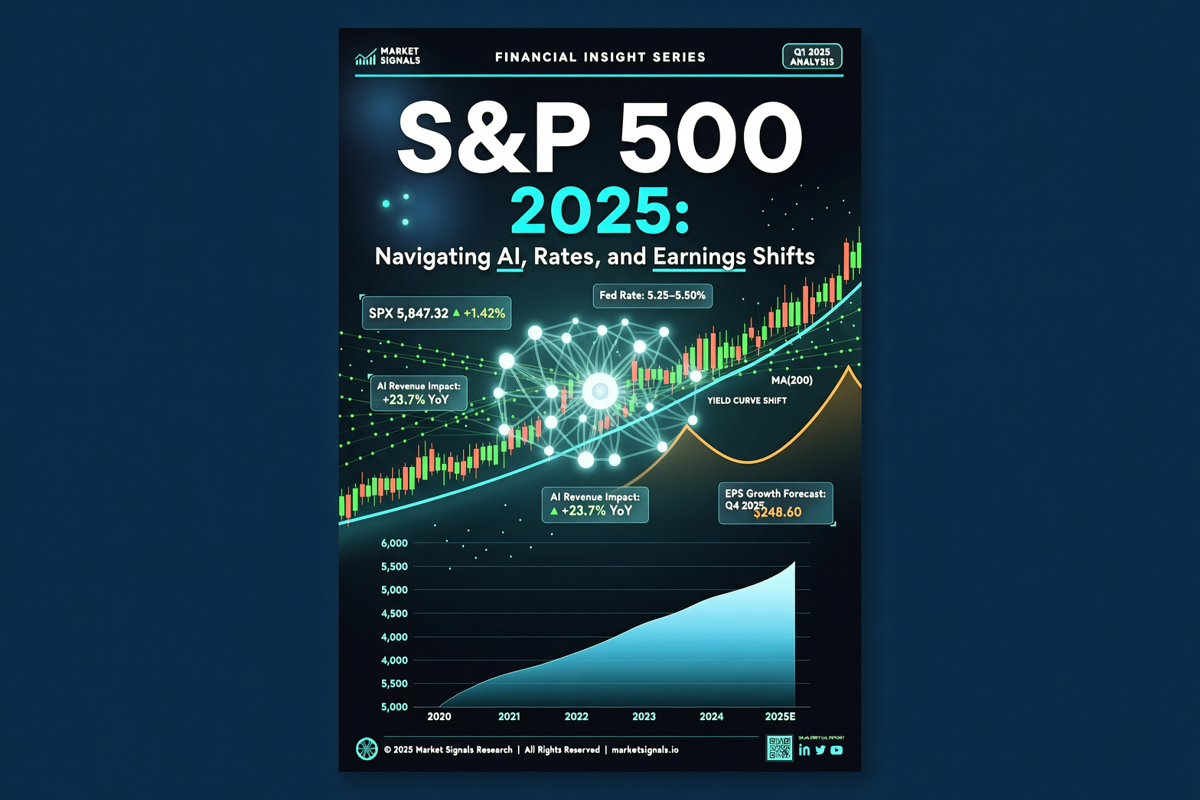
S&P 500 2025: Navigating AI, Rates, and Earnings Shifts
Explore key factors driving the S&P 500 in 2025: AI boom, Fed policy, earnings growth, and sector rotation. Expert insights for investors.
Introduction: The S&P 500 at a Crossroads
The S&P 500 enters 2025 with a mix of optimism and caution. After a robust 2024 fueled by artificial intelligence euphoria and resilient corporate earnings, the benchmark index now faces a more complex landscape. The Federal Reserve's interest rate trajectory, evolving AI monetization, and shifting sector leadership are all converging to shape the market's path. This article delves into the key themes that will define the S&P 500 in 2025, offering investors a roadmap for the year ahead.
The AI Revolution: From Hype to Tangible Results
Artificial intelligence remains the dominant narrative, but the focus is shifting from infrastructure buildout to practical applications. In 2024, companies like Nvidia and Microsoft led the charge, but 2025 demands evidence of AI-driven revenue growth beyond the semiconductor supply chain. Enterprise adoption of generative AI tools is accelerating, with sectors such as healthcare, finance, and manufacturing deploying AI to cut costs and boost productivity. However, the S&P 500's AI leaders must demonstrate that their massive capital expenditures are translating into sustainable earnings. Investors will scrutinize quarterly reports for metrics like AI-related revenue percentages and client retention rates. A key risk is that if AI monetization disappoints, the high valuations of mega-cap tech stocks could face a correction, dragging the index down.
Federal Reserve Policy: The Rate Cut Conundrum
After a series of rate hikes in 2022-2023, the Fed pivoted to a pause in 2024, and markets anticipate rate cuts in 2025. The timing and magnitude of these cuts are critical. Lower interest rates typically boost equity valuations by reducing the discount rate on future cash flows, particularly benefiting growth stocks. However, sticky inflation or a resilient labor market could delay cuts, keeping borrowing costs high. The S&P 500's performance in 2025 will hinge on whether the Fed achieves a 'soft landing'—curbing inflation without triggering a recession. If the economy slows too much, earnings estimates could be slashed, leading to a market downturn. Conversely, a smooth rate-cutting cycle could propel the index to new highs.
Earnings Growth: The Foundation of Returns
Corporate earnings are the bedrock of stock market performance. In 2025, S&P 500 earnings per share (EPS) are expected to grow by roughly 10-12%, according to consensus estimates. This growth is broad-based, with the Energy sector rebounding from a weak 2024 and Financials benefiting from a steepening yield curve. Tech and Communication Services remain the largest contributors, but their growth rates are moderating. A potential headwind is the strong US dollar, which reduces the value of overseas earnings for multinational companies. Additionally, rising labor costs and geopolitical uncertainties could pressure margins. Investors should watch for companies that can maintain or expand margins through pricing power or efficiency gains.
Sector Rotation: Defensives vs. Cyclicals
Market leadership is expected to broaden beyond the 'Magnificent Seven' tech giants. As interest rates decline, sectors that are sensitive to borrowing costs, such as Real Estate and Utilities, may outperform. These rate-sensitive sectors have been undervalued and offer attractive dividend yields. Cyclical sectors like Industrials and Materials could benefit from a rebound in manufacturing activity and infrastructure spending, partly driven by the CHIPS Act and clean energy initiatives. On the other hand, Consumer Discretionary faces headwinds from depleted pandemic savings and higher credit card debt. A rotation into value and small-cap stocks could also gain traction if the economy avoids a recession, as these segments are historically cheaper and more leveraged to domestic growth.
Geopolitical and Macro Risks
Investors cannot ignore the external shocks that could derail the S&P 500's rally. Trade tensions between the US and China persist, with potential tariffs on technology and green energy goods. The ongoing conflicts in Ukraine and the Middle East pose risks to energy prices and supply chains. Domestically, the US presidential election in November 2024 may cause policy uncertainty that lingers into 2025, particularly regarding corporate taxes and regulation. A surprise spike in oil prices could reignite inflation and force the Fed to hold rates higher for longer. While these risks are not the base case, they underscore the need for portfolio diversification and hedging strategies.
Valuation: Are Stocks Too Expensive?
The S&P 500's forward price-to-earnings (P/E) ratio stands at around 22, above its 10-year average of 18. This elevated valuation is justified by low interest rates and strong earnings growth, but it leaves little room for error. If earnings disappoint or rates remain high, a multiple contraction could occur. Historically, periods of high valuations are followed by lower returns. However, the index's composition has shifted towards higher-margin, asset-light tech companies, which naturally command higher multiples. Investors should focus on sectors and stocks with reasonable valuations relative to their growth prospects, rather than chasing the market as a whole.
Conclusion: A Year of Selective Opportunities
The S&P 500 in 2025 is poised for modest gains, but volatility will likely increase as the market digests shifting macro conditions. The key to outperformance lies in selectivity: favoring companies with strong AI adoption, pricing power, and balance sheets. A diversified portfolio that includes rate-sensitive sectors and international exposure can mitigate risks. While the bull market may continue, investors should remain vigilant about valuation and earnings quality. As always, a long-term perspective and disciplined asset allocation are the best tools for navigating the twists and turns ahead.