Wordle's Hidden Lesson: Why We Can't Stop Guessing
Discover the surprising psychology behind Wordle's addictive gameplay, and learn how this simple word game reveals deeper truths about human cognition and problem-solving.
In late 2021, a simple five-letter word game took the internet by storm. Wordle, created by software engineer Josh Wardle, quickly evolved from a private pastime for two to a global daily ritual. Millions now share their green, yellow, and gray grids on social media, turning a solitary puzzle into a shared experience. But beyond the surface-level fun, Wordle taps into something profound about how our brains work. This article explores the hidden cognitive mechanics that make Wordle irresistible and what it reveals about our love for problem-solving.
The Anatomy of a Wordle Puzzle
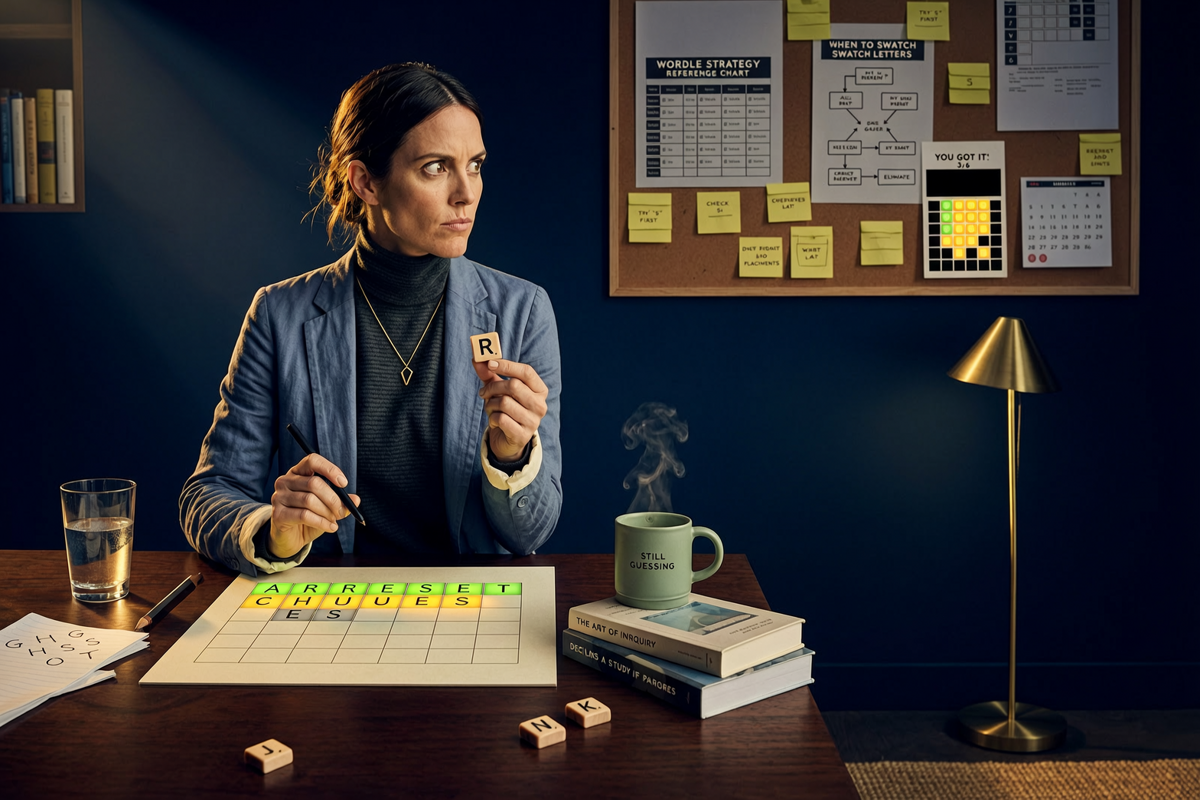
At its core, Wordle is a masterclass in constraint. You have six attempts to guess a five-letter word. After each guess, the game provides feedback: green for correct letter and position, yellow for correct letter in wrong position, and gray for incorrect letter. This feedback loop is the engine of the game. It transforms a simple guessing game into a deductive challenge, forcing players to weigh information with each move.
Why Six Attempts?
The choice of six guesses is no accident. Psychological research suggests that human working memory can hold about seven items (plus or minus two). Five-letter words offer a manageable chunk, and six tries allow for a strategic arc: explore with early guesses, then exploit the information. This balance between exploration and exploitation mirrors classic decision-making models. Too few tries and the puzzle feels unfair; too many and it loses tension. Six is the sweet spot that keeps players engaged without overwhelming them.
The Dopamine Loop: Why We Keep Coming Back
Wordle's daily format is a perfect dopamine delivery system. Each new puzzle is a fresh start, and the small win of solving it—or even the near-win—releases dopamine, the neurotransmitter associated with reward. The limited time window (one puzzle per day) prevents burnout, while the social sharing adds an extra layer of validation. Seeing friends post their scores creates a gentle competitive urge.
The Role of Uncertainty
Neuroscientist Tali Sharot notes that humans are drawn to moderate uncertainty. A completely random guess yields little satisfaction, while a guaranteed correct answer is boring. Wordle sits in the middle: you have partial information, and the outcome hinges on your reasoning. This sweet spot of uncertainty keeps the brain engaged. Each guess reduces uncertainty, and the final reveal provides a dopamine hit—whether you solve it in three tries or on the last chance.
Strategic Depth: From Casual to Expert
Though Wordle appears simple, it rewards strategic thinking. Expert players develop opening words that maximize vowel coverage and common consonants. Words like "SOARE" or "ARISE" are popular because they reveal a broad range of information. Players must also manage letter frequency and avoid repeating known gray letters. The game teaches probabilistic reasoning in a fun, accessible way.
Heuristics and Biases
Wordle also highlights cognitive biases. The confirmation bias can lead players to stick with a hypothesis too long, ignoring contradictory yellow clues. The availability heuristic might make someone favor an uncommon word because they saw it recently. Recognizing these biases improves play—and offers a microcosm of how our minds work in real-world decision-making.
The Social Dimension: Shared Puzzles, Shared Minds
Wordle's social aspect is key to its success. The grid format is easily shareable without spoilers (green, yellow, gray squares). This allows people to compare performance without giving away the answer. The community aspect fosters a sense of belonging. During the pandemic, Wordle provided a daily connection ritual. Even now, it remains a low-stakes way to check in with friends.
Cultural Impact on Language
Wordle has also influenced how we think about words. Obscure five-letter words like "KNURL" or "JAZZY" have entered common parlance. Some players report improved spelling and vocabulary. The game acts as a low-pressure learning tool, reinforcing word patterns without the drudgery of formal study.
Why Wordle Endures
In a landscape of flashy games with endless levels, Wordle's simplicity is refreshing. It respects the player's time—no ads, no push notifications, just one puzzle a day. This restraint is a deliberate design choice that contrasts with the attention-economy tactics of most apps. Wordle proves that less can be more. It taps into our innate desire for pattern recognition, closure, and social connection.
Wordle's hidden lesson is that the best games don't need complex graphics or convoluted rules. They need a tight feedback loop, a dose of uncertainty, and a way to share the experience. It's a reminder that our brains are wired to solve puzzles, and that sometimes the most engaging challenges are the simplest ones.
What Wordle Says About Us
Ultimately, Wordle's popularity reflects a universal human trait: the love of a good mystery. Each morning, we get a new five-letter enigma. We think, we guess, we learn. The satisfaction of seeing that final green row is a small triumph in an often chaotic world. Whether you play for strategy, language, or social bonding, Wordle offers a daily moment of focused attention. And in a distracted age, that might be its greatest gift.