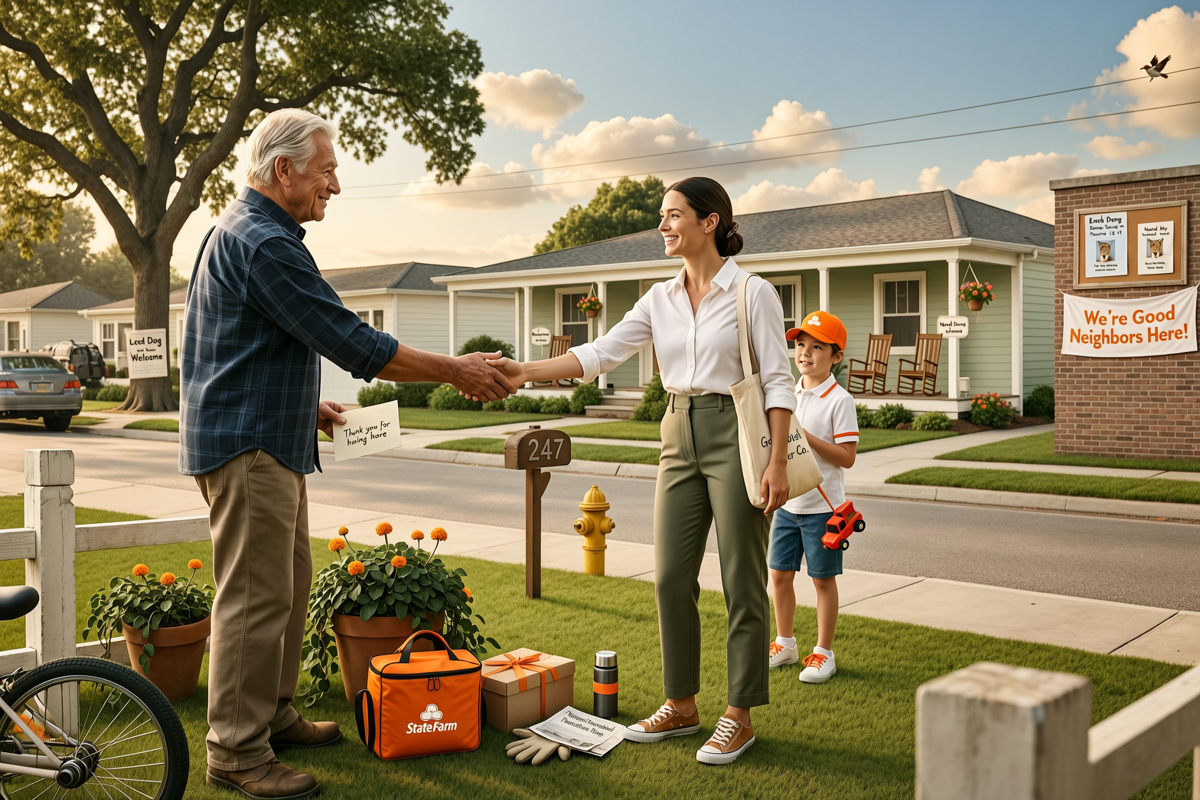
State Farm's Enduring Recipe: Why Being a Good Neighbor Still Wins
State Farm has built a century of trust on mutual ownership, personal agents, and a commitment to claims service. Here's what continues to make it resilient.
For over a century, State Farm has been more than a brand; it's been a reliable constant in American life. Anyone who grew up with the hum of the evening news remembers the earnest jingle: “Like a good neighbor, State Farm is there.” But behind that gentle slogan lives a complex, calculated business strategy that has kept this mutual insurer at the top of the industry—even as insurance giants fight for the same policyholders. This article breaks down what makes State Farm tick, how it has adapted to a digital-first world, and why its unique structure still gives it an edge.
Humble Roots, Mutual Foundations
State Farm was founded in 1922 in Bloomington, Illinois, by George J. Mecherle, a retired farmer and insurance salesman. Dissatisfied with the insurance industry's discrimination against rural drivers, Mecherle started a company specifically to serve the farming and rural community due to their lower risk. His key insight was not just fair pricing but a different corporate philosophy: State Farm would be a mutual company, meaning it is owned by its policyholders, not shareholders.
This mutual structure has massive implications. Without pressure to deliver quarterly profits to Wall Street, State Farm can be more patient and more generous. When underwriting performs well, the company can return capital to policyholders through dividends. And in tough years, it can absorb losses without changing its priorities. This is why, through the Great Depression, multiple recessions, and global pandemics, State Farm has remained stable.
The Human Advantage: Agents Who Are Neighbors
State Farm's growth was largely driven by its vast network of exclusive agents. These are independent contractors, but they only represent State Farm. With over 19,000 agents across the United States, the company has built a huge human sales force. This is radically different from online-only insurers like Geico or Progressive, which rely on algorithms and call centers.
Why does this matter today? Because insurance is an emotional product. When a tearful homeowner calls after a fire, or a worried parent is stuck at the roadside, they want a person who can listen and guide. The agent is often the closest human touchpoint for financial security after a loss. In recent surveys, customers consistently report higher satisfaction when they have an agent available for complex claims. The agent model also helps State Farm build long-term relationships. Agents often know their clients by name, understanding their family history, lifestyle, and future plans.
Beyond Auto: A Diversified Financial Shield
Most people associate State Farm with cars, but it is also a major player in homeowners, life, health, and commercial insurance. This diversification allows the company to offer packages that customers love—like bundling car and home policies for discounts.
State Farm also offers banking products and mutual funds through its affiliates. This all-around service makes it a one-stop shop for a family's financial protection. The ability to grow with the client is a key reason its policyholder retention rate is so high. State Farm's primary lines include:
- Auto insurance
- Homeowners insurance
- Renters insurance
- Life insurance
- Health insurance
Competing with the Gecko: The Direct Writer Challenge
For decades, State Farm and its peers were content with a straightforward battle among established insurers. Then, direct writers like Geico and Esurance changed the game by selling over the phone and online, slashing costs and pushing low prices. State Farm had to respond.
Instead of abandoning its agents, it leaned into them. The company argued that while direct insurers might offer a low initial quote, they lack the personalized counsel and proactive support needed when things go sideways. State Farm has also matched prices when possible and invested heavily in digital tools so that agents can be even more efficient. This hybrid approach—human intelligence plus smart technology—has preserved State Farm's premium share.
The Telematics and the App: Digital Innovation on Display
State Farm might be over a century old, but it is not stuck in the past. The company launched Drive Safe & Save telematics, which uses a mobile app or in-car device to monitor driving behavior and reward safe drivers. This program has been loved by careful drivers who feel they overpaid with a standard rate.
The State Farm mobile app now allows you to file claims, check coverage, upload photos, and even connect with AI-powered chat assistants. But crucially, the app is designed to feed into the human workflow. You can start a claim on your phone and then hand it over to an agent without repeating yourself. This smooth integration between digital entry and human follow-through is a strategic advantage that pure digital carriers struggle to replicate.
Weathering Catastrophes: Claims Culture in Action
The real test for an insurer is when disaster strikes. State Farm has built a reputation for mobilizing huge claims teams in the wake of hurricanes, wildfires, hailstorms, and tornadoes. Their catastrophe response units set up in parking lots, process claims on-site, and help communities rebuild quickly.
This is not just customer service; it is a marketing strategy. When a family receives a generous, timely settlement after a tornado, they become lifelong customers and recommend State Farm to everyone they know. The company's claims handling has earned it a strong reputation, even if the insurance world is full of complaints. State Farm keeps its services simple: send a claim, get a fair assessment, receive a check.
Financial Fortress: Why the Balance Sheet Matters
Policyholders often overlook financial strength, but it's the most crucial factor in an insurer. If the company can't pay claims in a decade, your premium was for nothing. State Farm's balance sheet is a fortress. As a mutual, it holds a massive surplus to absorb catastrophes and lawsuits. It consistently gets high ratings from A.M. Best and other rating agencies. This stability is a significant selling point for corporate clients and families alike.
What's Next for the Good Neighbor?
Looking ahead to 2025 and beyond, State Farm is not resting on its laurels. It is exploring new risk areas like cybersecurity insurance for consumers, investing in climate-resilient research, and expanding its usage-based insurance boundaries. But it also faces challenges: climate change is causing more severe weather, and socially, auto insurance rates are rising due to costly repairs and technology.
The biggest question is whether the agent model stays relevant in a world of AI quotes and app-based services. The answer may be that the model evolves. We may see “virtual agents” who work from home and continue community relationships. But the philosophy remains: help people even before they ask for it.
State Farm's march to the top proved that insurance is about trust more than algorithms. While its competitors race to undercut prices, State Farm focuses on a relationship. As long as the “Good Neighbor” promise stays fresh, the company can continue to thrive. The insurance world is changing, but a mutual company built on hope, hard-wired for service, may just have the blueprint for longevity.