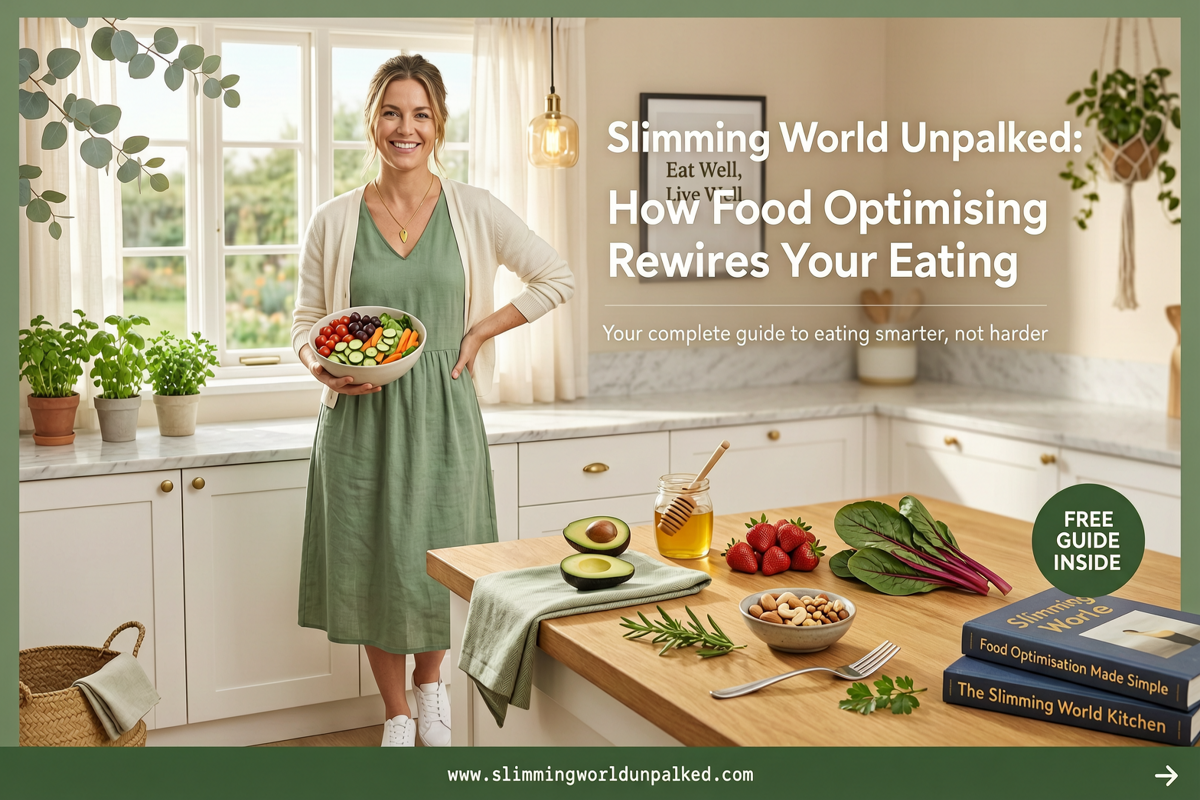
Slimming World Unpacked: How Food Optimising Rewires Your Eating
Discover how Slimming World's Food Optimising, Syns, and group support create a flexible, sustainable weight loss approach that focuses on fullness and freedom.
Slimming World has been a household name in UK weight loss for decades, but for many outsiders, the jargon – Food Optimising, Syns, Healthy Extras – can feel like a secret language. At its heart, the programme is less about strict calorie counting and more about rethinking how you eat so you feel full, satisfied, and still lose weight. Let’s unpack how this popular diet plan actually works, and what the science says about its effectiveness.
The Core Philosophy: Food Optimising
Created in 1969 by Margaret Miles-Bramwell, Slimming World is built around a concept called Food Optimising. Instead of imposing rigid meals or forbidding entire food groups, it teaches members to categorise foods into three groups: Free Foods, Healthy Extras, and Syns. The goal is to help you eat more of the foods that fill you up for relatively few calories, while still allowing treats that keep you sane.
This isn’t a crash diet. It’s a long-term behaviour change designed to reduce hunger and cravings, which are the two biggest reasons most diets fail. By focusing on portions and food composition, you can eat generous amounts of certain foods without tipping your energy balance.
Free Foods: The Fullness Factor
Free Foods are the bedrock of the plan. These are mostly lean proteins, vegetables, fruits, potatoes, rice, and pasta – foods that are low in energy density but high in volume. The idea is that you can eat these until you feel comfortably full, without measuring or weighing them. Slimming World encourages members to base every meal on these foods, which naturally boosts fibre and water intake while cutting calories.
Common examples include skinless chicken, fish, eggs, lean beef, and a wide range of vegetables. Even certain carbs like wholewheat pasta and potatoes are free, which surprises many people who expect a low-carb diet. The real magic is satiety: eating a large plate of vegetable-rich curry with chicken is far more filling than a small burger, yet delivers fewer calories.
Healthy Extras: The Nutrition Safety Net
Healthy Extras are measured portions of foods that provide essential nutrients like calcium, healthy fats, and B vitamins. These include whole grains, dairy products, and some nuts. You’re typically allowed a set number of Healthy Extras each day – for example, 150ml of milk, 2 slices of wholemeal bread, or a serving of high-fibre cereal. This ensures your diet remains balanced even when you’re cutting calories.
Think of Healthy Extras as a bridge between Free Foods and Syns. They add important variety and prevent nutritional gaps that can occur in calorie-restrictive diets. By making these foods intentional, members learn appropriate portion sizes for items that are easy to overeat.
Syns: The Flexible Currency
Then there are Syns – short for synergy, because no food is inherently bad, but some pair poorly with weight loss. Every food that isn’t Free or a Healthy Extra has a Syn value based on its calorie, fat, and sugar content. Members get between 5 and 15 Syns per day (often 15 for most women, 20 for men), which can be spent on chocolate, wine, crisps, or even a splash of olive oil.
Syns are a psychological release valve. Instead of feeling forbidden, you’re given a budget to work with. This not only adds flexibility for social events and special occasions but also encourages mindful indulgences. You might choose to spend half your daily Syns on a small biscuit or save them for a weekend treat. The system promotes moderation, not deprivation.
Why It Works: The Science of Satiety
Research consistently shows that diets high in water and fibre and low in energy density are easier to stick to. A 2017 study in the Journal of Nutrition found that people who ate larger portions of low-energy-dense foods consumed fewer total calories and reported less hunger. Slimming World’s Free Food framework capitalises on this principle, creating a natural calorie deficit without the need for heavy weighing.
Additionally, the emphasis on protein helps preserve lean muscle mass during weight loss, which keeps metabolism from crashing. Regular weigh-ins and group accountability also draw on behavioural psychology. A landmark study from the University of Birmingham found that group-based weight loss programmes are significantly more effective than self-directed dieting, especially after a year.
Group Support and the Weekly Weigh-In
Every week, members attend a group session that combines a private weigh-in with a facilitated conversation called Image Therapy. This isn’t just a lecture – it’s a chance to share successes, talk through challenges, and get advice from a trained consultant. The group dynamic creates a supportive tribe where people celebrate each other’s losses and troubleshoot plateaus together.
The weekly weigh-in serves as a powerful setting for habit formation. Knowing you’ll step on the scale every seven days often nudges you to make better choices throughout the week. The consultant is trained to frame even a small gain as a learning opportunity, which helps prevent the spiral of shame that often derails dieters.
Pros and Cons: An Honest Look
The Upsides
- Flexibility: No food is off-limits, so you can adapt the plan to your tastes and cultural preferences.
- No Hunger: Generous portions of Free Foods reduce cravings, making it easier to stay on track.
- Community: Regular meetings provide social support that many people need to stay motivated.
- Simple Rules: Once you learn the basic categories, it’s easy to apply in everyday life.
The Drawbacks
- Cost: Weekly group fees can add up compared to free apps or self-guided plans.
- Weigh-In Anxiety: Some people find weekly public weigh-ins stressful, despite the confidentiality.
- Syns Misuse: Those who overestimate syns or “save them up” may stall their progress.
- Limited Nutritional Depth: The programme’s simplified categories may not address specific medical conditions like diabetes without clinical oversight.
Is Slimming World Right for You?
Slimming World is a great fit if you enjoy structure but dislike restrictive rules. It’s also ideal for people who thrive on group accountability and want a plan that doesn’t require sophisticated meal prep or expensive products. Because it encourages a gradual, mindful approach, it may be more sustainable than fad diets that promise rapid results.
On the other hand, if you prefer to count macros precisely or need a highly customised plan from a dietitian, a more clinical programme might be better. Similarly, if the weekly fee or group setting isn’t attractive, you could apply the principles yourself by learning the Free Food list and tracking syns informally.
Tips for Success on Slimming World
- Base every meal on a third plate of vegetables or salad to boost fullness.
- Plan your Syns ahead of social events so you’re not caught off guard.
- Don’t skip Healthy Extras – they keep your bones and gut healthy.
- Use the weekly weigh-in as data, not a verdict on your worth.
- Keep a food diary, even if it’s just a note on your phone, to stay mindful.
Ultimately, Slimming World’s staying power lies in its simple, humane message: you can lose weight without going hungry or demonising food. By prioritising satiety, support, and reasonable indulgences, it gives millions of people a pragmatic path to a healthier body. Whether you join a group or adapt its principles on your own, the Food Optimising framework is a reminder that successful weight loss isn’t about punishment – it’s about building a balanced relationship with the food on your plate.