Pound to Euro in 2025: Key Drivers and Forecasts
Discover the key factors influencing the GBP/EUR exchange rate in 2025, from central bank policies to economic data, and get expert forecasts for the year ahead.
Introduction
The GBP/EUR currency pair remains one of the most traded and closely watched in the foreign exchange market. As we move through 2025, several critical factors are shaping the exchange rate between the British pound and the euro. This article explores the key drivers, recent trends, and expert forecasts to help you understand what lies ahead for this important currency pair.
Key Drivers of GBP/EUR in 2025
Central Bank Policies
The Bank of England (BoE) and the European Central Bank (ECB) are at the forefront of influencing the pound-to-euro rate. In 2025, both central banks are navigating a delicate balance between controlling inflation and supporting economic growth. The BoE has maintained a relatively hawkish stance, keeping interest rates elevated to combat persistent inflation. Meanwhile, the ECB has adopted a more cautious approach, pausing rate hikes as the eurozone economy shows signs of slowing. These divergent policies have historically supported the pound, but any shift in rhetoric could quickly alter the dynamic.
Economic Data Releases
Key economic indicators such as GDP growth, employment figures, and inflation data play a significant role in currency valuation. In 2025, the UK economy is expected to grow modestly, with GDP forecasts around 1.2%, while the eurozone struggles with stagnation, particularly in Germany and France. Stronger UK economic data could boost the pound, while disappointing figures might weigh on it. Traders closely watch monthly releases like PMIs, retail sales, and industrial production for short-term volatility.
Political and Geopolitical Factors
Political stability and geopolitical events also impact the GBP/EUR rate. The UK's post-Brexit trade relationship with the EU continues to evolve, with ongoing negotiations over financial services and regulatory alignment. Any signs of friction or cooperation can move the market. Additionally, global events such as energy price shocks, trade disputes, or conflicts in Eastern Europe could trigger safe-haven flows into the euro or pound, depending on the circumstances.
Recent Trends and Technical Analysis
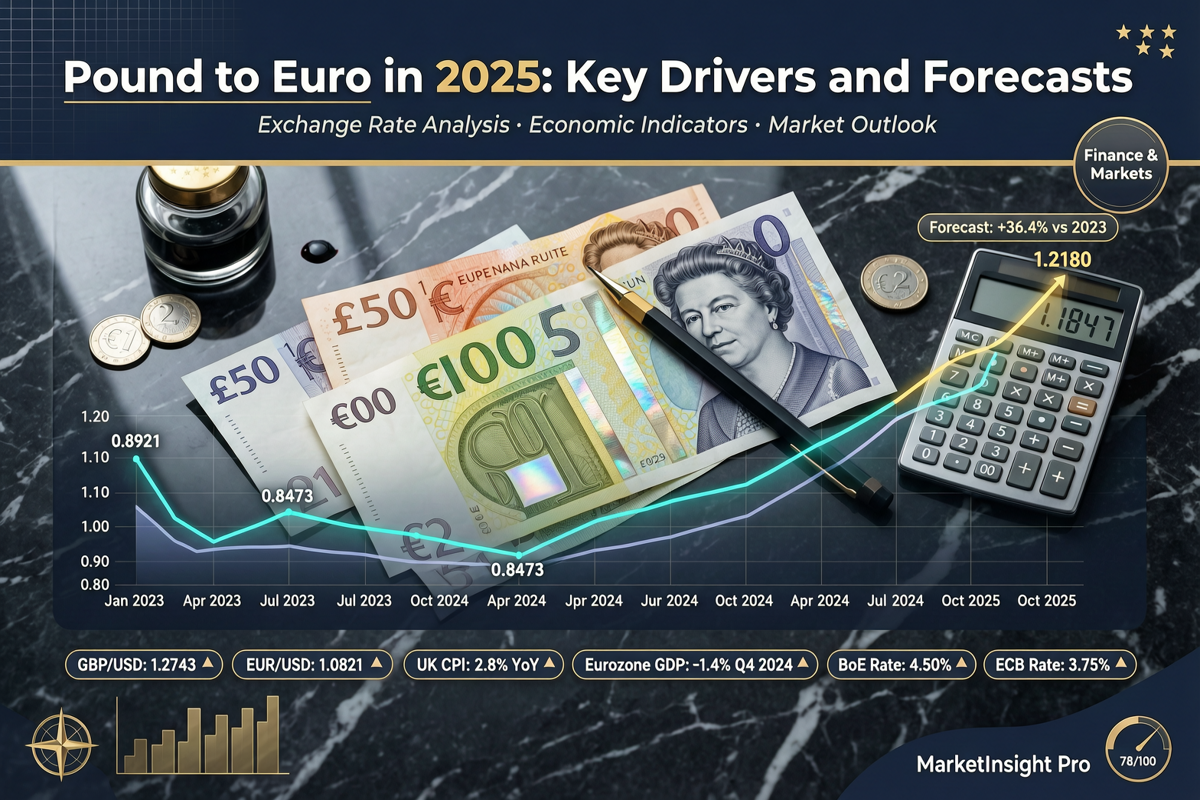
In early 2025, the pound-to-euro rate has traded in a range of approximately 1.15 to 1.20, with a slight upward bias. Technical analysis shows support around 1.1550 and resistance near 1.1950. The pair has been consolidating after a strong rally in late 2024, driven by expectations of BoE rate cuts later in 2025. However, the ECB's potential easing cycle has kept the euro from weakening too much. Moving averages suggest a neutral to bullish outlook, with the 50-day moving average crossing above the 200-day moving average, a classic 'golden cross' signal.
Forecasts for 2025
Most major banks and financial institutions have revised their GBP/EUR forecasts for 2025. The consensus is for the pound to strengthen gradually, reaching around 1.22 by mid-year and potentially 1.25 by year-end, assuming the BoE cuts rates more slowly than the ECB. However, risks are tilted to the downside if UK inflation proves stickier than expected or if the eurozone economy rebounds. Some analysts predict a more volatile range of 1.12 to 1.28, depending on data surprises.
Practical Implications for Businesses and Travelers
For businesses engaged in cross-border trade between the UK and the eurozone, the fluctuating exchange rate presents both opportunities and risks. Companies can use hedging strategies such as forward contracts or options to lock in favorable rates. Travelers planning trips to Europe in 2025 should monitor the rate and consider exchanging currency when the pound is strong. With forecasts suggesting a stronger pound, now may be a good time to plan ahead.
Conclusion
The pound-to-euro exchange rate in 2025 is shaped by a complex interplay of monetary policy, economic data, and geopolitical events. While the outlook is cautiously optimistic for the pound, volatility remains a key theme. Staying informed about central bank decisions and key data releases will be crucial for anyone exposed to this currency pair. Whether you are a trader, business owner, or traveler, understanding these drivers can help you make better decisions in the year ahead.