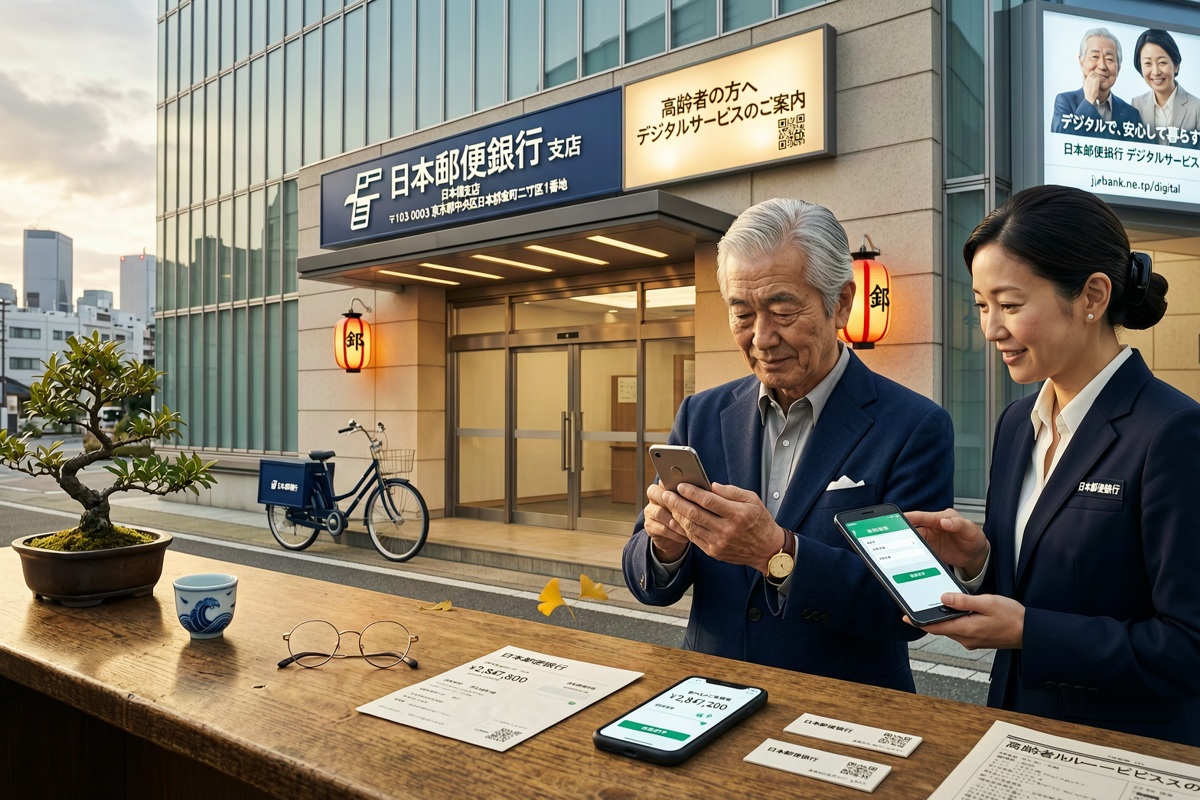
Japan Post Bank: Tradition Meets Digital in an Aging Japan
Explore how Japan Post Bank blends its legacy postal savings network with digital innovation to serve Japan's aging population and navigate the future of banking.
Introduction
Japan Post Bank, a subsidiary of Japan Post Holdings, is one of the world's largest deposit-taking institutions. With over ¥200 trillion in assets and a network of more than 24,000 post office branches nationwide, it plays a pivotal role in Japan's financial landscape. For decades, it has been synonymous with safety and convenience, especially among the country's elderly population. However, as Japan grapples with a rapidly aging society and the rise of digital banking, Japan Post Bank faces a unique challenge: how to modernize without alienating its core customer base.
The Legacy of Postal Savings
Japan Post Bank's origins date back to 1875, when the government established the postal savings system to encourage thrift among ordinary citizens. The system's hallmark was its accessibility—anyone could open an account at a local post office, even in remote rural areas. Over time, it became the country's largest repository of personal savings, often used for retirement and emergency funds. Today, despite the emergence of private banks and online services, many Japanese, particularly seniors, still trust the post office for its stability and face-to-face service.
Challenges of an Aging Customer Base
Japan's demographic shift—with over 29% of the population aged 65 or older—poses both a strength and a vulnerability for Japan Post Bank. On one hand, senior citizens are loyal depositors who value low-risk products like savings accounts and time deposits. On the other, as this generation passes, the bank must appeal to younger users who expect mobile-first, feature-rich banking. Moreover, the Bank of Japan's prolonged ultra-low interest rate policy has squeezed net interest margins, making it difficult for traditional savings models to remain profitable.
Digital Divide
A major hurdle is the digital divide. While many seniors are comfortable with basic ATMs, adoption of smartphone banking remains low. Japan Post Bank has responded by introducing simple, large-font apps and in-branch support for digital services. But it must balance innovation with preserving the personal touch that older customers rely on.
Digital Transformation Initiatives
Japan Post Bank has launched several digital initiatives to bridge the gap between tradition and technology:
- JP Bank App: A streamlined mobile application offering balance checks, transfers, and ATM location services. The app emphasizes ease of use with enlarged text and voice guidance.
- Next-Generation ATMs: Upgraded machines supporting cashless deposits, foreign currency transactions, and QR code withdrawals. Many are located in post offices with extended hours.
- Open API Partnerships: Collaborations with fintech startups to offer personal financial management tools and micro-investment services through the bank's platform.
- In-Branch Digital Kiosks: Tablets and touchscreens for self-service account opening and document processing, with staff on hand to assist.
Strategic Focus: Seniors First
Unlike many private banks that target younger demographics, Japan Post Bank's digital strategy remains inclusive. The bank has introduced “digital concierge” services in branches where staff help customers set up and learn to use digital tools. It also offers a simplified online banking interface that mimics the look of paper passbooks—familiar to older customers—while adding digital features underneath.
Financial Education for Seniors
Another key initiative is financial literacy programs focused on preventing fraud and promoting safe digital habits. Japan Post Bank runs seminars in post offices across the country, teaching seniors how to spot phishing scams and use official apps securely.
Competitive Landscape
Japan Post Bank competes with megabanks like MUFG and SMBC, as well as digital-only banks such as Rakuten Bank and Sony Bank. Its advantage lies in its unmatched branch network, especially in rural areas where other banks have closed branches. However, digital newcomers offer higher interest rates and slicker interfaces. To stay relevant, Japan Post Bank must leverage its physical footprint as a trust anchor while accelerating digital upgrades.
Future Outlook
Looking ahead, Japan Post Bank is expected to continue its digital transformation while addressing the needs of an aging society. Key trends to watch include:
- AI-Powered Customer Service: Chatbots and voice assistants tailored to Japanese language and elderly speech patterns.
- Biometric Authentication: Fingerprint and facial recognition for secure, cardless transactions at ATMs and post office counters.
- Partnerships with Healthcare and Pension Services: Integrating banking with medical expense payments and pension disbursements to create a one-stop service for seniors.
Japan Post Bank's ability to innovate without losing its core identity will determine whether it remains a cornerstone of Japanese banking or fades into obscurity. For now, its blend of tradition and modernization offers a blueprint for other institutions facing similar demographic shifts.