Fitbit's Quiet Transformation: From Pedometer to Medical Ally
From step counter to medical-grade ally: Explore how Fitbit now measures sleep, heart rhythm, stress, and more to help you take charge of your health.
The Evolution of a Wrist-Worn Landmark
When Fitbit first hit the market in 2009, it was a tiny plastic clip that simply counted steps. It promised to nudge couch potatoes toward a more active lifestyle, and it worked wonders. But the world of personal health monitoring has transformed dramatically since then, and Fitbit has transformed right along with it. Today, the company that helped spark the consumer wearables revolution is a data-rich health platform that goes far beyond step counts, syncing seamlessly with smart scales, apps, and even medical research.
Now under Google's umbrella, Fitbit has quietly repositioned itself from a fitness accessory to a legitimate health monitoring tool. The shift is not just cosmetic; it is a fundamental rethinking of what a wrist-worn device can do. This article explores how Fitbit’s latest features, from ECG readings to passive sleep tracking, are reshaping the way we monitor our bodies and why this matters for the future of proactive healthcare.
Sensors and Algorithms: A More Complete Health Picture
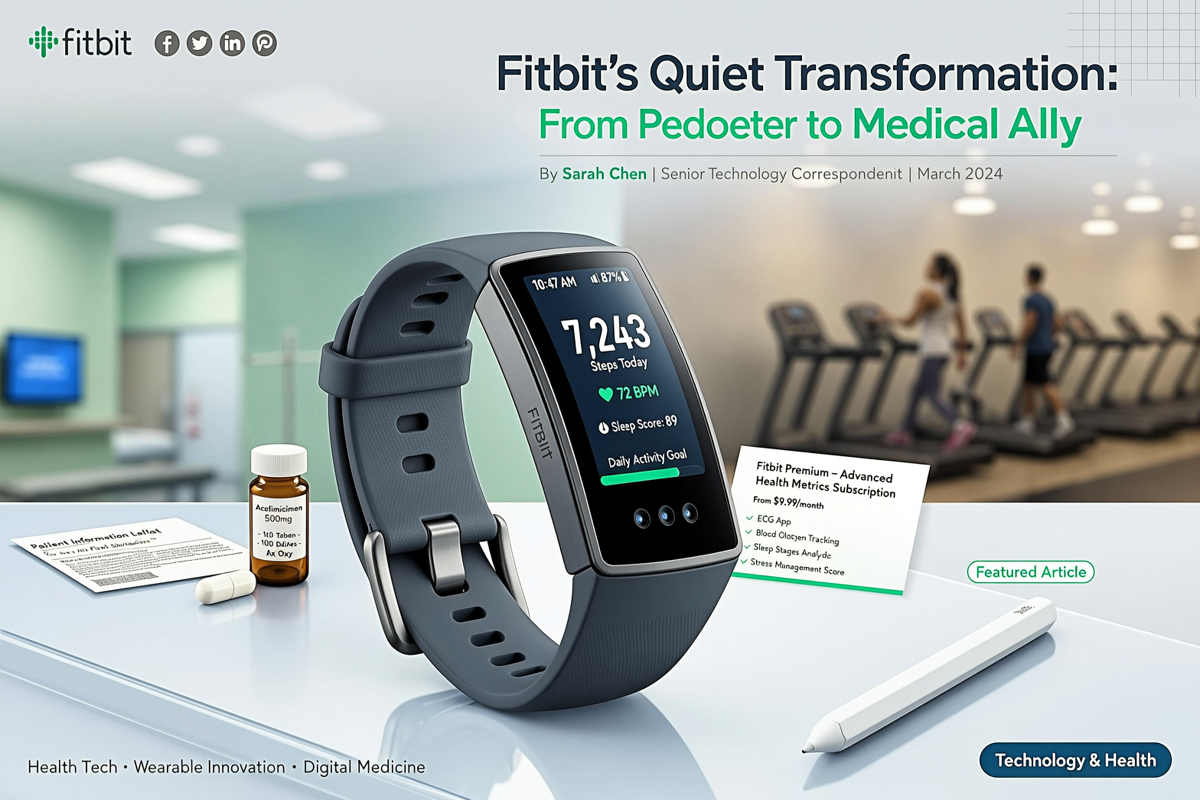
Modern Fitbits are packed with sensors that capture much more than acceleration. The latest models include an optical heart-rate monitor, pulse oximeter, and even an electrocardiogram (ECG) application. These small additions have huge implications. For example, the ECG feature can detect atrial fibrillation, a serious but often silent cardiac condition. Previously, such detection required a trip to the doctor’s office and a dedicated device. Now, a user can take a 30-second reading anywhere.
Fitbit also tracks sleep stages through a combination of motion and heart-rate variability. The device identifies light, deep, and REM sleep, then offers a “Sleep Score” that helps users understand their sleep quality. This level of insight was once confined to sleep clinics. By bringing it to the wrist, Fitbit gives individuals the ability to spot patterns and make adjustments to their sleep hygiene over time—an invaluable tool for long-term health.
Stress, Recovery, and the Body’s Hidden Signals
Beyond cardiac and sleep metrics, Fitbit now includes a Stress Management Score and a Daily Readiness Score in its app. These features use heart-rate variability, exertion, and sleep data to estimate how well your body is recovering from daily stressors. For athletes, this helps balance training loads and avoid overtraining. For everyday users, it provides a tangible number that nudges them to take a rest day or practice mindfulness. The algorithm doesn’t just tell you what you have done; it tells you how your body is handling it.
Google Integration: A Smarter Health Ecosystem
Google’s acquisition of Fitbit in 2021 raised concerns about privacy, but it also opened doors to deeper integration with Android and the broader Google ecosystem. The Fitbit app now syncs with Google Health Connect, allowing third-party apps to read and write fitness data in a standardized way. This interoperability is crucial for users who want to centralize their health data across multiple devices—think smart scales, blood pressure monitors, and even continuous glucose monitors. Fitbit is no longer an island; it is a node in a growing personal health network.
Moreover, Google’s artificial intelligence capabilities could soon supercharge Fitbit’s analytical power. Imagine an assistant that notices subtle changes in your resting heart rate, sleep quality, and activity levels, then proactively suggests a doctor visit. The potential for early detection of illnesses is enormous. While this level of AI is still in its infancy, the groundwork is being laid today.
Real-World Impact: Beyond the Hype
Fitbit’s shift toward health monitoring has already produced tangible benefits for users. A 2022 study published in the Journal of the American Heart Association found that Fitbit’s ECG algorithm had a high positive predictive value for detecting atrial fibrillation. Similarly, wearable data has been used to monitor respiratory conditions and even detect early signs of COVID-19. Fitbit’s large user base provides an unprecedented dataset for researchers, enabling studies that would have been impossible a decade ago.
But the impact isn’t just clinical. For daily users, the ability to track a full health picture—activity, sleep, stress, and heart health—in one place creates a powerful feedback loop. Seeing a poor sleep score followed by a high resting heart rate might encourage someone to skip the evening coffee or to go to bed earlier. These small behavior changes, repeated consistently, can improve long-term cardiovascular health and overall well-being.
Privacy and Data Security in the Wearable Age
No discussion of health monitors is complete without addressing privacy. Fitbit collects highly sensitive health data, and users are rightfully concerned about how that data is used. Google has historically monetized user data, which is why the acquisition attracted close scrutiny from regulators. Fitbit has pledged not to use health data for advertising, and a “Support for Access” policy allows users to download or delete their data at any time. Still, it is essential for users to be mindful of the permissions they grant and to understand that any connected device is a potential vector for data breaches.
Fitbit’s response has been to increase transparency and put users in control. The app now includes an in-depth privacy summary and granular toggles for data sharing. However, as the ecosystem expands with more third-party integrations, the attack surface grows. Cybersecurity in personal health monitoring is not just about encryption; it’s also about end-user education. Understanding what your device records and who can access it is a critical part of responsible wearership.
The Future of Personal Health Monitors
Fitbit has evolved from a pedometer to a medical ally, but the journey doesn’t end here. Next-generation devices are likely to include blood pressure measurement, skin temperature sensing, and even sweat chemistry analysis. Fitbit’s roadmap, as part of Google, potentially includes deeper ties with telemedicine platforms. Imagine a physician receiving a week’s worth of your pulse, sleep, and activity data before a virtual consultation. That is not science fiction; it is a near-term possibility.
What sets Fitbit apart in this crowded market is its focus on making health data understandable and actionable. The company hasn’t forgotten its core audience: everyday people who want to feel better, not just athletes who chase performance. The app’s friendly interface and gentle reminders keep health monitoring approachable, encouraging long-term engagement. This user-centric philosophy is exactly what the future of personal health monitors needs—technology that doesn’t just collect data, but turns it into wiser decisions.
Conclusion: Embrace the Data, But Stay in Control
Fitbit’s transformation is a testament to how far personal health monitoring has come. What was once a simple step counter is now a reliable reference point for millions of people checking their heart rhythm, sleep quality, and stress levels. As the platform continues to mature, it will play an increasingly important role in preventive medicine and personal wellness.
Nevertheless, a Fitbit is only as useful as the person wearing it. The data is a guide, not a verdict; it should prompt conversations with healthcare professionals rather than replace them. By staying curious and informed, you can leverage your Fitbit to gain a deeper understanding of your body—one heartbeat, one breath, one night’s sleep at a time.